The Attention Crisis in Online Casinos: Competing for Player Time


Recommended casinos
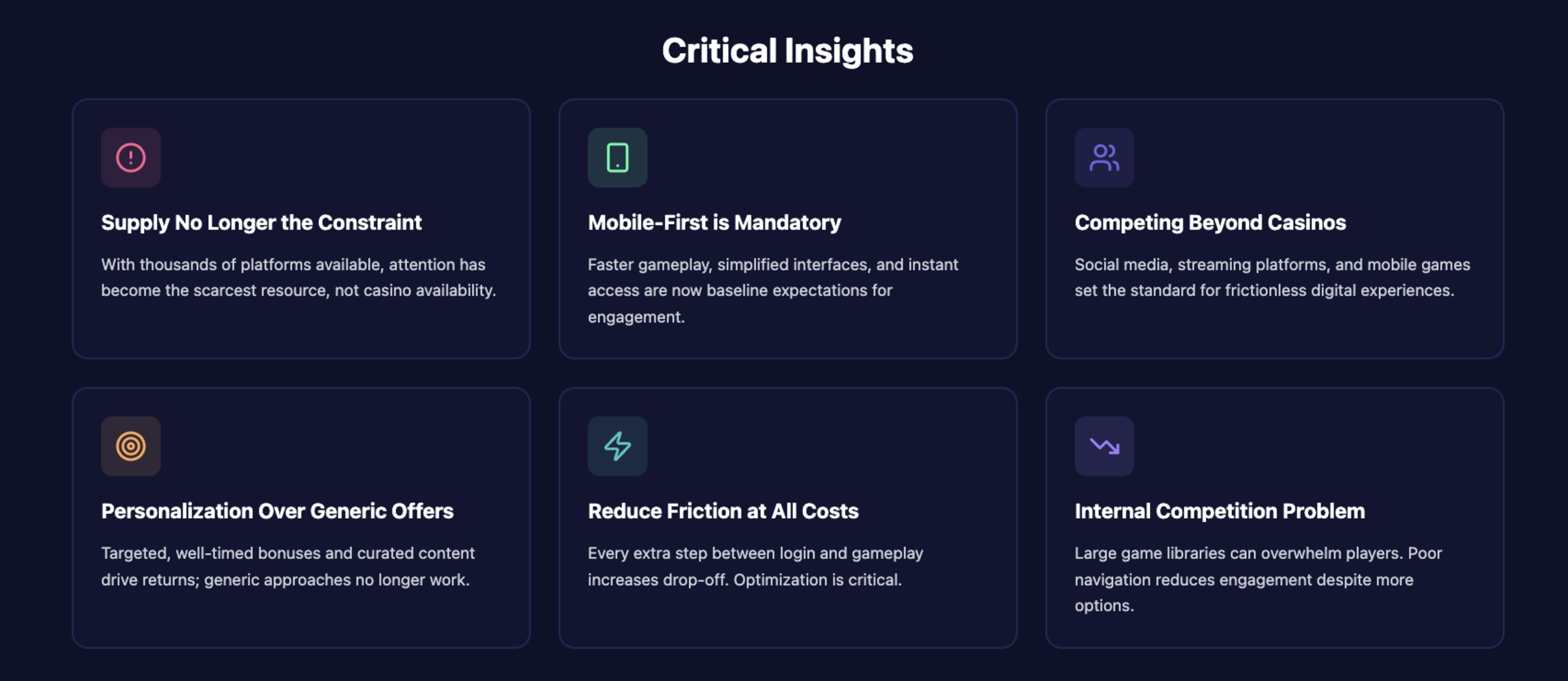
The online casino market is no longer limited by choice. Players already have access to thousands of platforms and games, many of which offer similar experiences. What has become limited instead is time — and the amount of attention players are willing to spend on any single platform.
This has changed how competition works. Online casinos are no longer competing only with each other, but with every digital product on a player’s device. A casino session now competes directly with social media, mobile games, streaming content, and sports apps — all designed to capture attention instantly.
For operators, the challenge is no longer just acquisition. The real pressure lies in holding attention long enough to create engagement — and giving players a reason to return.
Attention Has Become the Deciding Factor
Most online casinos today operate on similar foundations. Game libraries often overlap, powered by the same providers. Payment systems are standardized. Even user interfaces follow familiar patterns. As a result, the difference between platforms is rarely about access. It is about how quickly and effectively a casino captures attention once a player arrives.
The first moments matter more than ever. If a platform feels slow, unclear, or overwhelming, the player leaves. There is no cost to switching, and alternatives are always within reach. What used to be a question of “which casino is better” has quietly become “which platform fits into my time right now.”
From Long Sessions to Short Bursts
One of the clearest changes in player behavior is how sessions are structured. The traditional model — long, uninterrupted play — is being replaced by short, frequent visits.
Players now engage in:
- Quick sessions during breaks
- Short interactions while commuting
- Brief logins between other digital activities
Slots naturally fit this behavior, but even live casino formats are adapting. Faster rounds, simplified interfaces, and mobile-friendly layouts are becoming standard.
Engagement Is No Longer About the Outcome Alone
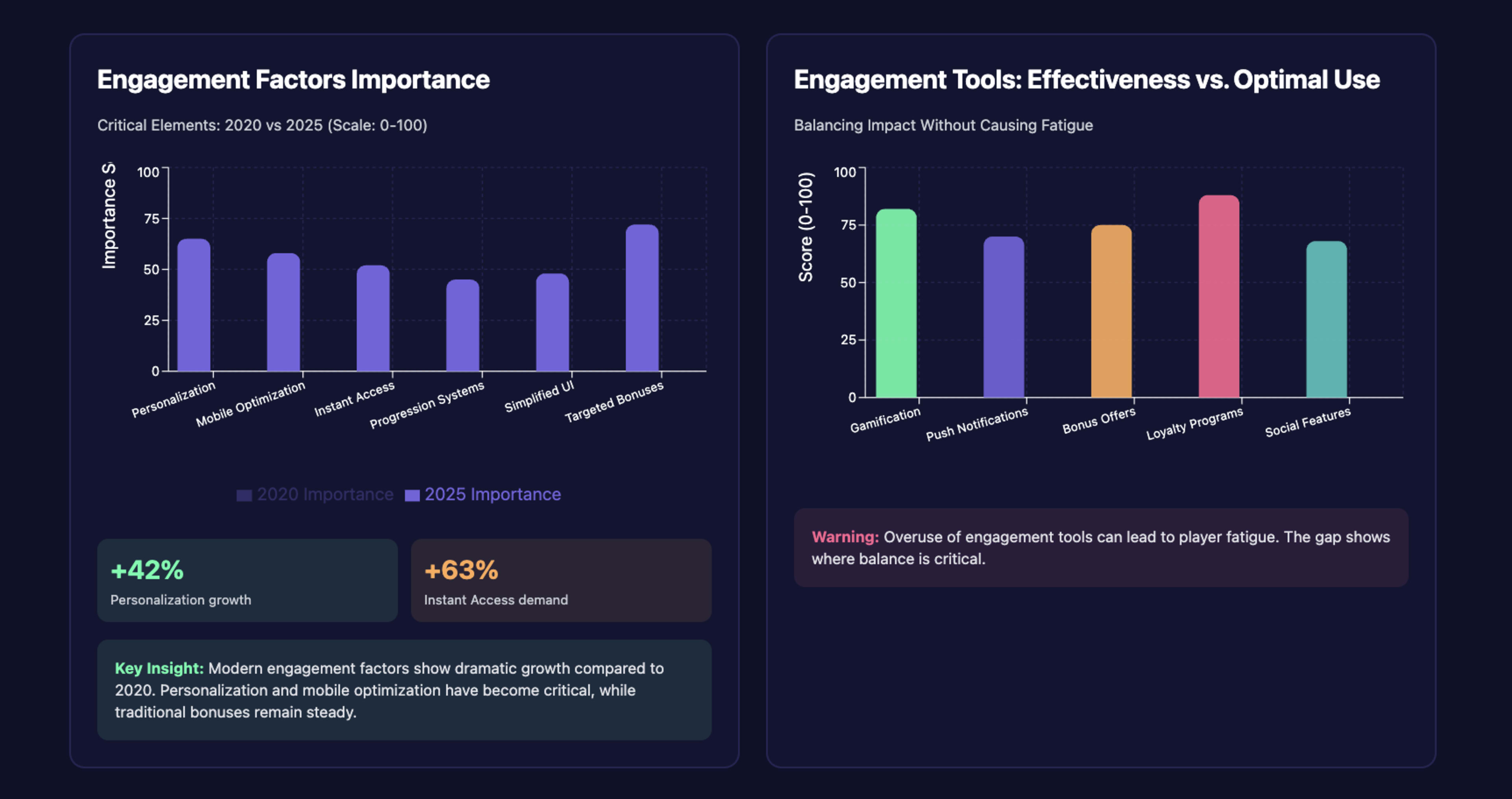
Winning has always been part of the appeal of online casinos, but it is no longer the only driver of engagement. What keeps players returning is the structure around the gameplay. Modern platforms are designed to create continuity. A session does not feel isolated — it connects to previous activity and influences what comes next. Progression systems, ongoing rewards, and recurring incentives give players reasons to return even when they are not actively playing for long. This changes the dynamic. The focus moves from a single result to an ongoing interaction. Instead of asking whether a player had a successful session, operators are increasingly concerned with whether that player comes back the next day.
How Bonuses Keep Players Coming Back
Online casino bonuses still play a role, but their function has evolved. Players are familiar with standard offers, and expectations have adjusted accordingly.
What matters now is not just the presence of an incentive, but how it is delivered. Timing, relevance, and context all influence whether a bonus actually captures attention or is ignored.
A generic offer can easily blend into the background. A well-timed, behavior-driven incentive can bring a player back at the right moment.
This reflects a broader change in how engagement works. Attention is not constant — it comes in short windows. Platforms that recognize and respond to those windows are more effective.
Competing With Everything, Not Just Casinos
One of the most important changes in the online casino landscape is the expansion of competition.
Players are not choosing between similar platforms. They are choosing between entirely different types of digital experiences.
A casino session competes directly with:
- a short video feed
- a mobile game level
- a streaming episode
For online casinos, this introduces a structural disadvantage. Gambling requires decisions — deposits, stakes, risk. Other platforms remove those barriers completely.
This is why reducing friction has become a priority. Faster onboarding, instant gameplay, and simplified navigation are no longer optional improvements. They are necessary adjustments to remain competitive.
The Challenge of Too Much Choice
Inside the platform itself, another issue appears. The volume of available content can work against engagement.
Hundreds or even thousands of games may be accessible at once. While this creates variety, it can also slow decision-making. Players spend more time choosing than playing — or leave before choosing at all.
To manage this, operators are refining how content is presented. Featured casino games, trending sections, and personalized recommendations are designed to guide attention quickly.
The objective is simple: reduce the time between entering the platform and starting a game.
If that gap becomes too long, attention shifts elsewhere.
Engagement Tools and Their Real Impact
Different engagement mechanisms serve different roles, but their effectiveness depends on how they are combined and paced.
| ⚙️ Element | 🔍 What It Does | 📊 Effect on Player Behavior |
|---|---|---|
| Fast gameplay | Removes waiting time | Encourages immediate interaction |
| Mobile optimization | Improves accessibility | Increases session frequency |
| Bonuses | Creates short-term incentives | Triggers return visits |
| Gamification | Builds ongoing structure | Supports long-term engagement |
| Personalization | Highlights relevant content | Speeds up decision-making |
No single feature solves the attention problem. The balance between them is what shapes the overall experience.
The Risk of Over-Engagement
As platforms add more features to hold attention, a new risk emerges. When every system is active at once — notifications, rewards, challenges, promotions — the experience can become overwhelming. Players begin to filter out signals. What was meant to engage starts to lose impact. This creates a balance issue. Engagement must be strong enough to retain attention, but not so constant that it leads to fatigue.
Operators that manage this balance well are more likely to sustain long-term activity rather than short bursts followed by drop-off.
Conclusion
The attention crisis in online casinos is not a temporary phase. It reflects a broader change in how people use digital platforms. Time is limited. Attention is selective. And competition is no longer defined by industry boundaries. For online casinos, success depends on fitting into this reality. Not by offering more, but by aligning better with how players actually behave.
Because in the end, the platform that wins is not the one with the most features. It is the one that earns a place in a player’s time — even if only for a few minutes at a time.