155.io Launches Rush Hour at Online Casinos | Real-World Gameplay

Recommended casinos
Key Takeaways:
- Rush Hour introduces live CCTV traffic footage as the basis for casino betting rounds.
- The game launched in February 2026 and is now integrated into several international online casino platforms.
- Outcomes are determined through AI vehicle detection rather than traditional RNG systems.
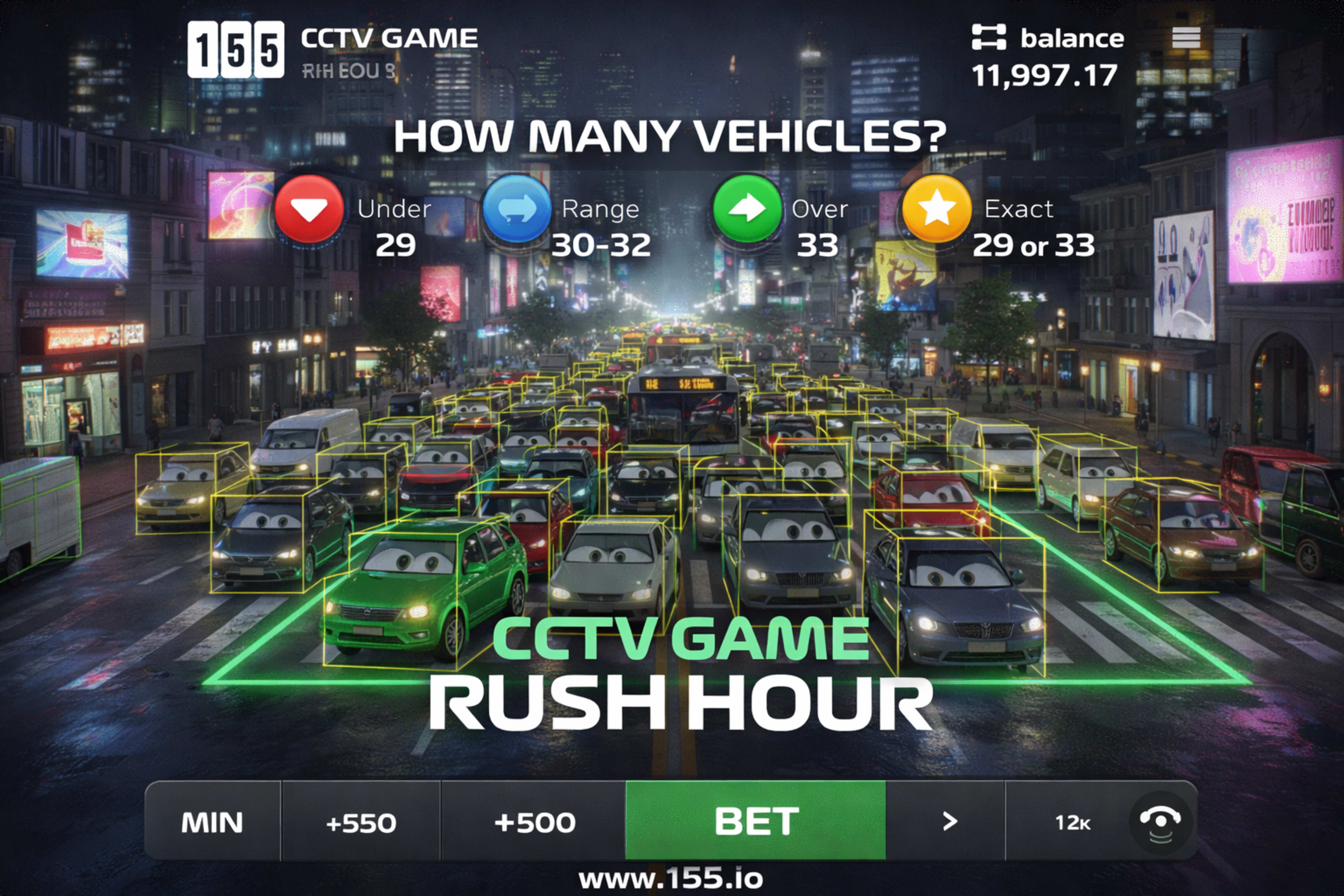
Rush Hour, a new live-format game that replaces digital simulations with real-world traffic footage, has launched across multiple online casino platforms, such as Stake.com, Roobet, and Shuffle. Developed by 155 software, the title uses public CCTV camera streams from city streets and turns everyday vehicle movement into short betting rounds. The concept is straightforward: Players watch a live traffic feed and place bets on how many vehicles will pass through a clearly marked area within a limited time window. Once the countdown ends, an AI-powered tracking system finalizes the number of detected vehicles and automatically settles wagers.
This structure separates Rush Hour from standard online casino products. Most online casino games rely on random number generators (RNGs) or studio-based dealers. In contrast, Rush Hour’s results are tied directly to real-time external events. Players can see the same footage that determines the outcome, adding a level of visible transparency to the process. Rounds are designed to be fast, generally lasting less than one minute. Betting options typically include Over/Under predictions, set number ranges, and exact count wagers, which carry higher volatility. The pacing aligns the game with other quick-cycle formats that have grown in popularity, particularly within crypto-focused online casino environments.
Industry observers view the February 2026 rollout as part of a broader shift in iGaming product development. Software providers are increasingly experimenting with hybrid formats that blend livestream technology, automated data tracking, and simplified betting mechanics. Rather than focusing solely on new slot mechanics or themed table games, some developers are exploring how real-world data streams can be integrated into top casino gambling platforms.
From a technical perspective, Rush Hour depends on computer vision systems that identify and count vehicles within a defined digital boundary. This automated detection reduces the need for manual oversight and ensures rapid settlement at the end of each round. The use of publicly accessible traffic feeds also avoids the licensing structures typically associated with online casino licensing. The expansion of this format across online casinos suggests operators are testing alternative engagement models that move beyond traditional casino games. While it remains a niche category compared to online slots or live dealer tables, real-time environment-based games represent an experimental direction for the sector. The introduction of CCTV-driven betting rounds shows how online casinos continue to explore new ways to structure gameplay. Whether this approach develops into a wider subcategory within iGaming will likely depend on sustained player engagement and regulatory clarity in international markets.